PUMA achieves global scale with unified platform serving 1+ million monthly active users across multiple regions
Composable architecture reduces deployment time from 24 hours to 5 minutes while maintaining regional flexibility

Nearform partnered with PUMA to transform their fragmented, per-region web presence into a unified global e-commerce platform.
PUMA's web presence sprawled across independent regions worldwide, with many using Salesforce to manage and display web content. This fragmentation made it difficult to scale efficiently, share bug fixes globally and deploy changes quickly. The technology team needed to transition to a unified platform without sacrificing each location's unique requirements for content, languages, payment processors and specialized campaigns.
Working with Nearform, PUMA built a composable architecture using best-in-class technologies that reduced deployment time from 24 hours to 5 minutes, enabled global teams to move forward together faster and served 1+ million monthly active mobile users across multiple regions.
Balancing global unity with regional flexibility
The platform needed to allow individual locations to manage their content, languages, payment processors, specialized campaigns, legacy systems and other third-party vendors while enabling each site to scale, deploy and change independently.
The platform needed to address several critical requirements:
- Regional content and campaign management autonomy
- Support for multiple languages and payment processors
- Integration with legacy systems and third-party vendors
- Independent scaling and deployment per region
- Shared codebase for efficiency and consistency
- Rapid deployment and bug fix propagation globally
PUMA engaged Nearform to build a scalable, unified e-commerce platform using composable architecture and best-in-class technologies.
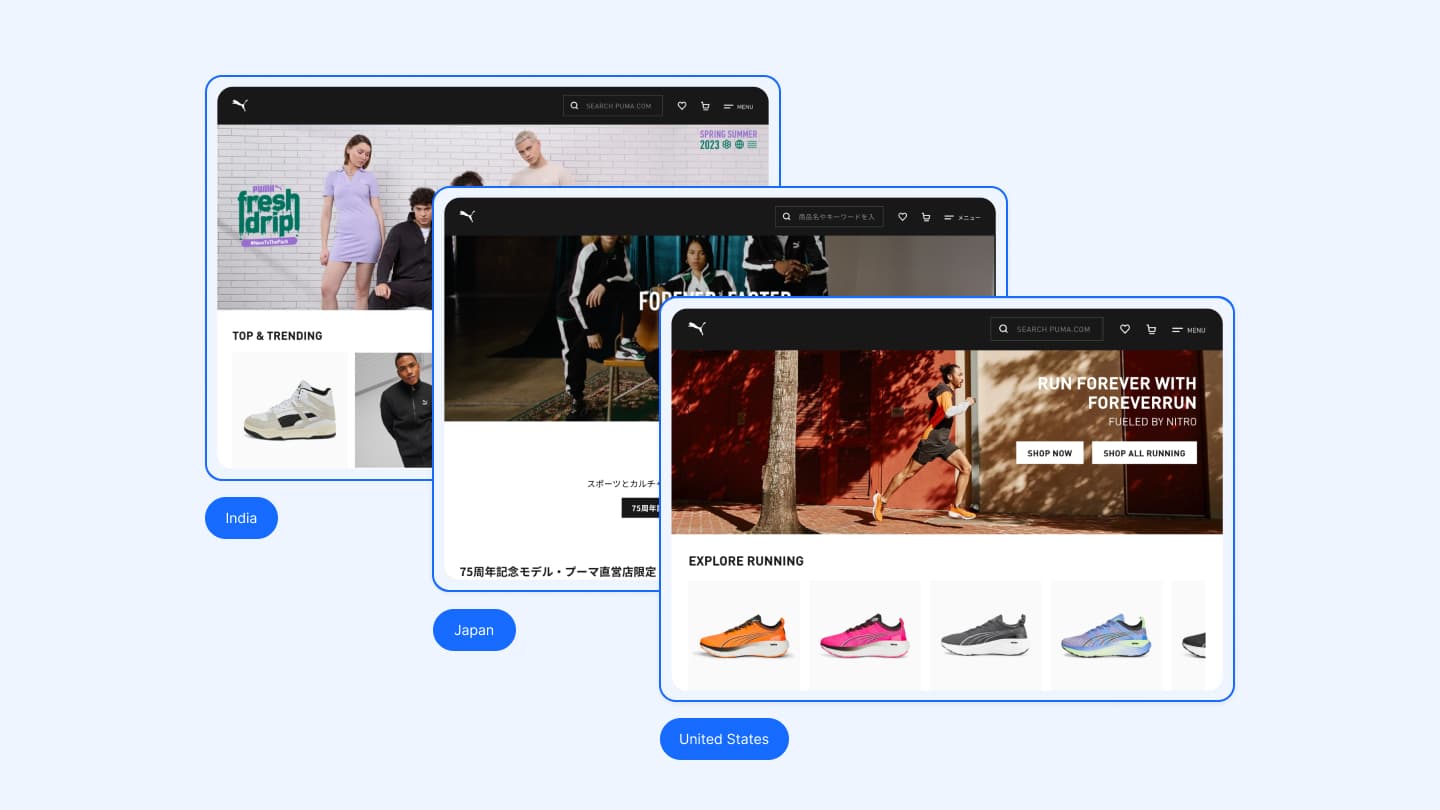
Building unified foundation with composable architecture
Nearform's initiative was to build a scalable, unified e-commerce platform using best-in-class technologies. The team used composable architecture to build a platform that scales to millions of users worldwide while addressing each region's unique requirements.
The collaborative process surfaced the following priorities for the platform:
- GraphQL API layer: Single API abstracting regional requirements and decoupling UI from Salesforce
- Server-rendered Next.js: Rapid page loads, high cacheability and consistent SEO performance
- Headless CMS (Sanity): Content management without engineer involvement
- React Native mobile app: Cross-platform solution with web feature parity and mobile-specific capabilities
- CDN caching (Fastly): Improved performance and reduced load on origin data sources
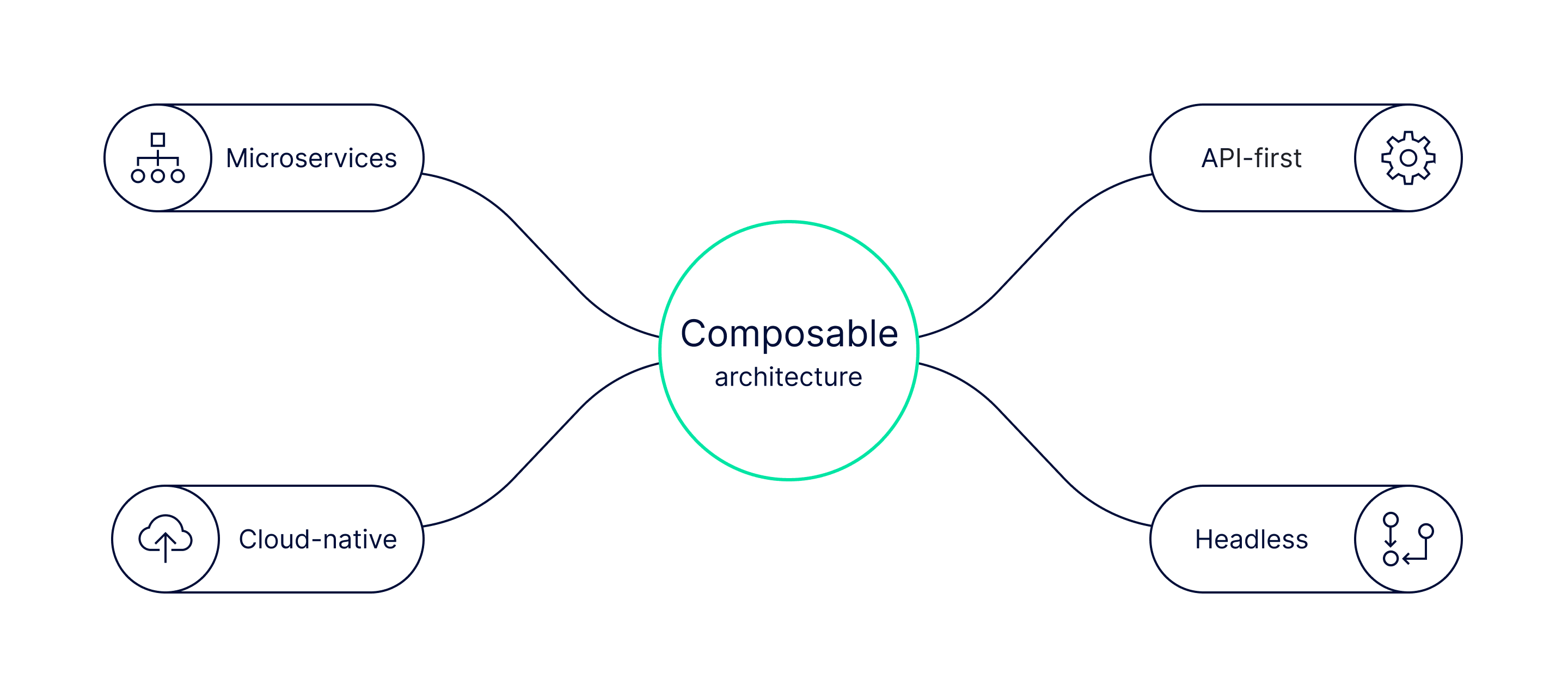
Decoupling UI with flexible GraphQL API
The application pulls from a single GraphQL API which abstracts away each region's requirements. Using this approach, PUMA can decouple its UI from Salesforce and other third-party providers and only request the data it needs.
This flexible API layer enables efficient data fetching while maintaining the independence needed for regional variations.

Optimizing performance with server-rendered Next.js
The web application itself is a server-rendered Next.js site. For an e-commerce website, server-rendering is crucial—allowing for rapid page loads, high cacheability and consistent SEO performance.
Next.js offers best-in-class developer experience and is supported worldwide by open-source developers. Fastly's CDN caches server-rendered pages to improve performance and reduce load on origin data sources.
Serverless infrastructure using AWS Lambda
The API and the Next.js application are powered by AWS Lambda. Traditional web infrastructure is often expensive and inflexible to fluctuating traffic levels. Serverless offers just-in-time scalability to meet customer demand while ensuring PUMA doesn't pay for resources they are not using. Serverless has made hosting PUMA's platform easy to manage, rapid to deploy, and optimized for performance and cost.

Empowering content teams with headless CMS
Sanity is used to allow content managers to update content without the involvement of engineers. By organizing data into an easily queryable state, Sanity allows departments across PUMA to find and use data from a single source of truth.
This enables content to be shared across the web and mobile applications, improving efficiency and consistency.
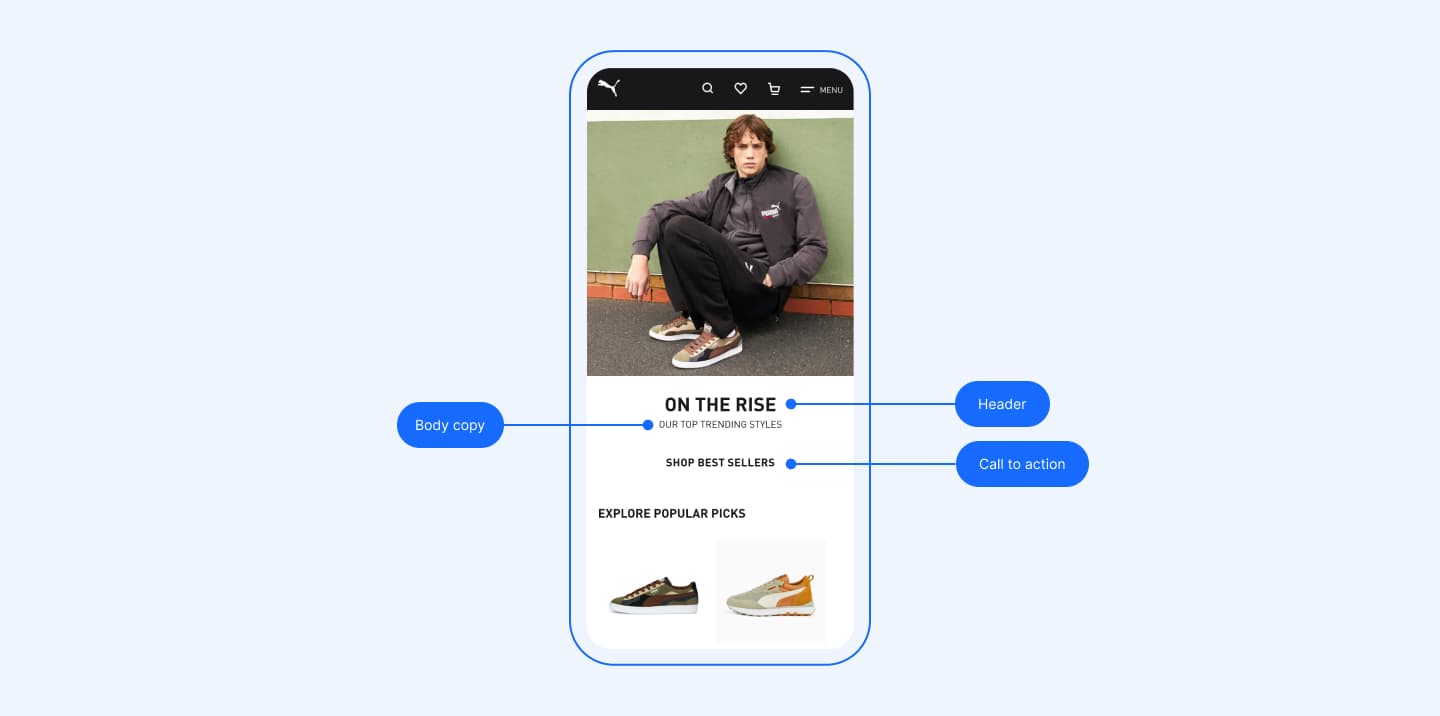
Extending capabilities with React Native mobile app
The collaboration created seamless experiences across web and mobile platforms. By working closely with PUMA throughout development, the project incorporated regional needs, technical requirements and business objectives into every decision. The result is a platform that's scalable, flexible and built for global growth. These are the highlights of the new platform:
GraphQL API enables regional flexibility
Single API abstracts regional requirements, decoupling UI from Salesforce and third-party providers while allowing each region to request only the data it needs.
Server-rendered Next.js optimizes performance
Server-rendering enables rapid page loads, high cacheability and consistent SEO performance, with Fastly CDN caching reducing load on origin data sources.
Sanity CMS empowers content teams
Headless CMS allows content managers to update content without engineer involvement, providing departments across PUMA with a single source of truth shared across web and mobile.
React Native delivers cross-platform mobile experience
With the unifying GraphQL API layer, the mobile team built a cross-platform app with web feature parity plus additional capabilities like AR try-on, preferred sizes and custom marketing content.
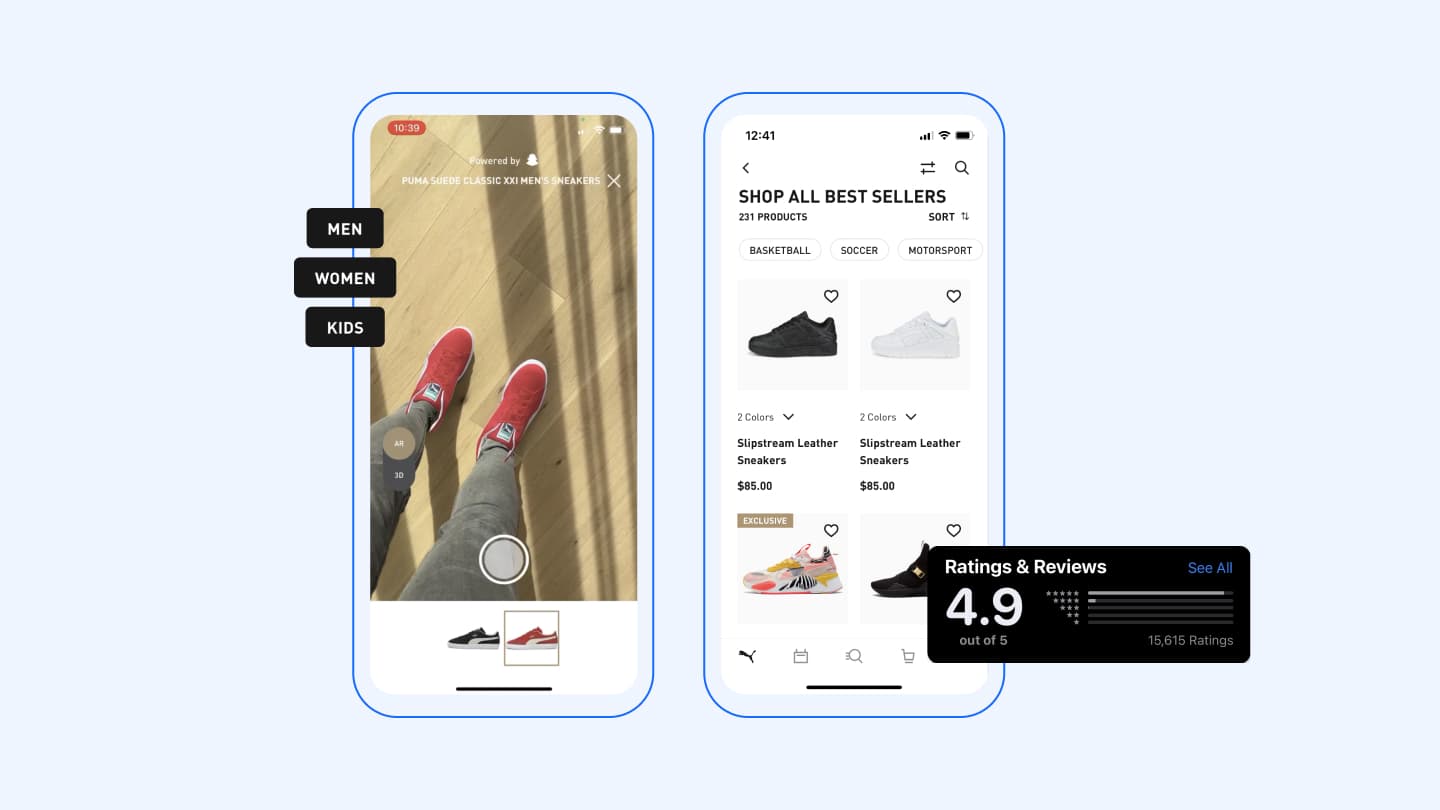
Delivering global efficiency and regional agility
The platform delivered transformative improvements in deployment speed, global collaboration and operational efficiency. Among the many benefits, the most significant improvement has been the consolidation of application code across all regions—a single bug fix is applied to everyone, everywhere, at once. Changes to content, configuration and products are now significantly faster. What used to take PUMA almost 24 hours to deploy to production takes less than 5 minutes today. With new metrics and monitoring, PUMA can spot regressions immediately and precisely identify issues before they reach customers.
Our impact
Deployment time reduced from 24 hours to 5 minutes
1+ million monthly active mobile users served globally
Single codebase with bug fixes applied globally at once
Regional autonomy maintained while enabling global efficiency
1 million+
monthly active mobile users globally
5 minutes
deployment time (from 24 hours)
Our capabilities
DESIGN
Design systems
ENGINEERING
Product development
Cross-platform application development
Developer experience
System reliability
Scalable composable architecture
Serverless infrastructure
Web development
Mobile development
STRATEGY
Time to market
SEO performance enhancement
You may also like

Uniting digital presences by reimagining architectures

Driving user loyalty: The importance of design systems in multi-brand environments
Insight, imagination and expertly engineered solutions to accelerate and sustain progress.